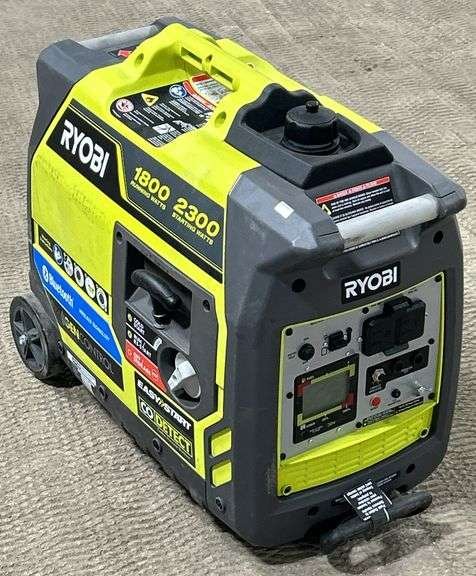
The hum of a reliable portable generator can be the soundtrack to freedom on a campsite, the reassuring pulse of productivity on a job site, or the quiet promise of comfort during a power outage. If you’ve been scouting for that perfect blend of power and portability, the Ryobi 2300 generator likely caught your eye. It’s a popular choice for many, but diving into Ryobi 2300 Generator Comparisons & Alternatives is key to ensuring it's the right choice for you. Let's pull back the curtain and see how this contender stacks up against the competition and whether its unique features truly give it an edge.
At a Glance: The Ryobi 2300 Generator in Brief
For those who like their information served swiftly, here’s a quick rundown of the Ryobi RYi2322E:
- Power Output: 1,800 running watts / 2,300 starting watts
- Engine: 79 cc OHV 4-stroke gasoline
- Noise Level: 57 dBA (at 25% load, 23 ft away)
- Fuel Capacity & Run Time: 1.2 gallons, up to 10.3 hours at 25% load
- Weight & Portability: 57 lbs, with wheels and telescopic handle
- Key Features: Electric start, Ryobi's EasyStart pull-start, <3% THD clean power, GenControl Bluetooth app (remote monitoring/stop), CO Detect safety, digital data center, USB ports.
- Warranty: 3 years
Why the Ryobi 2300 Catches Attention (and Where it Fits In)
The Ryobi RYi2322E isn't just another generator; it's designed with modern convenience in mind. It hits a sweet spot for casual users who need portable, clean power without breaking the bank or their backs. Think weekend warriors, tailgaters, and DIY enthusiasts. Its relatively low noise output, compact design, and smart features make it attractive for applications where power is needed discreetly and efficiently.
This generator delivers 120V from its 79 cc OHV 4-stroke gasoline engine, producing a clean sine wave output with less than 3% Total Harmonic Distortion (THD). That low THD is critical because it means you can safely power sensitive electronics like laptops, smartphones, and even delicate medical equipment without fear of damage. For a comprehensive dive into this model, you can explore everything about the Ryobi 2300.
Whether you're looking to run a 10k BTU window air conditioner on a hot day or simultaneously power a small energy-efficient refrigerator, a laptop, a slow cooker, and a coffee maker, the Ryobi 2300 has the capacity. It's built for flexibility, offering enough juice for specific power tools or a comfortable RV experience.
Deciphering the Ryobi 2300's Strengths and Weaknesses
No generator is perfect for everyone, and the Ryobi 2300 is no exception. Understanding its advantages and disadvantages is crucial for an informed decision.
The Upsides: Where the Ryobi Shines
- Smart Technology Integration: The GenControl app, accessible via Bluetooth, is a standout feature. Imagine monitoring fuel levels, run time, and power output, or even remotely stopping your generator, all from your smartphone. It’s incredibly convenient for camping or when your generator is just out of reach.
- Easy Starting: With both an electric starter (battery included) and Ryobi's EasyStart 3-step pull-start mechanism, getting this generator going is remarkably simple. No more wrestling with stubborn pull cords.
- Portability: Weighing 57 lbs and equipped with a set of wheels and a telescopic handle, it’s designed for easy transport. Its closed construction (L25.1 x W13.3 x H18.4 in) further enhances its portability and contributes to its quiet operation.
- Safety First: The integrated CO DETECT technology monitors carbon monoxide levels and automatically shuts down the unit if unsafe concentrations are detected. This is a non-negotiable safety feature that every modern generator should have. Overload protection and automatic low oil shut-off add further layers of security.
- Clean Power: With <3% THD, you get the clean energy sensitive electronics demand.
- Performance Tracking: The digital data center on the control panel provides real-time information on fuel level, remaining run time, and power output, helping you manage your power consumption effectively.
The Downsides: Areas for Consideration
- Noise Level for its Class: While 57 dBA is quiet, for its power output, some competitors in the 2000W-2200W range manage to be even quieter. For contexts where absolute silence is paramount, this could be a slight drawback.
- Fuel Efficiency: At an average of 0.12 GPH for its 10.3-hour run time at 25% load, it's decent but not class-leading. Some alternatives offer better fuel economy.
- Reported Reliability Concerns: While anecdotal, some users have reported early technical issues, like not consistently achieving rated wattage. This suggests that while Ryobi offers a 3-year warranty, long-term durability might be a point of concern for some heavy users.
- No 30A RV Outlet: For RV users, the absence of a dedicated 30A (TT-30R) outlet means needing an adapter, which isn't ideal for direct hookup.
Benchmarking the Ryobi 2300: Key Comparison Points
When you're trying to decide if the Ryobi 2300 is your ideal generator, you need a framework for comparison. Here are the critical metrics to evaluate any portable inverter generator against:
- Power Output (Running vs. Starting Watts): Understand the difference between continuous running watts (what it can consistently power) and starting watts (the momentary surge needed for motor-driven appliances). The Ryobi’s 1,800 running / 2,300 starting watts is a good baseline for many common tasks.
- Noise Level (dBA): Measured in decibels, this is crucial for campgrounds, tailgating, or residential use. Lower is always better. Remember, a difference of 3 dBA effectively doubles or halves the sound intensity.
- Run Time & Fuel Efficiency: How long will it run on a full tank, and how much fuel does it consume per hour? This impacts convenience and operational cost.
- Portability & Design: Weight, dimensions, and features like wheels and handles dramatically affect how easy it is to move and store.
- Outlets & Connectivity: Look for the types and numbers of outlets (120V AC, USB, 12V DC), and any smart features like Bluetooth connectivity for remote control.
- Clean Power (<THD): Essential for sensitive electronics. Aim for <5% THD, with <3% being ideal.
- Safety Features: CO shut-off, low oil shut-off, and overload protection are non-negotiable.
- Reliability & Warranty: A good warranty (like Ryobi's 3-year) offers peace of mind, but a strong reputation for durability often speaks louder.
- Price Point: Value isn't just about the cheapest option; it's about what you get for your money.
The Elephant in the Room: Ryobi 2300 vs. Honda EU2200i
It’s almost impossible to discuss portable inverter generators without mentioning the Honda EU2200i. It’s often considered the gold standard, and rightfully so. So, how does the Ryobi 2300 stack up against this legend?
| Feature | Ryobi RYi2322E | Honda EU2200i |
|---|---|---|
| Running Watts | 1,800 W | 1,800 W |
| Starting Watts | 2,300 W | 2,200 W |
| Engine Size | 79 cc | 121 cc |
| Noise Level | 57 dBA | 48 to 57 dBA (depending on load) |
| Fuel Capacity | 1.2 gallons | 0.95 gallons |
| Max Run Time | 10.3 hours (at 25% load) | 8.1 hours (at 25% load) |
| Weight | 57 lbs | 47.4 lbs |
| Key Features | Electric Start, GenControl App, CO Detect, Wheels | Fuel Shutoff Valve, Oil Alert, Parallel Capable |
| THD | <3% | <3% |
| Warranty | 3 years | 3 years |
| Price | Generally more affordable | Significantly higher price point |
| Where Honda Excels: | ||
| The Honda EU2200i is renowned for its exceptional reliability and durability. Many users report decades of trouble-free operation with proper maintenance. It’s also generally considered quieter across its operating range, particularly at lower loads, despite having a larger engine. Its build quality and consistency are frequently cited as reasons for its higher price tag. If you need a generator for high-stakes situations, frequent use, or simply want the peace of mind that comes with a legendary brand, a deeper dive into the Honda EU2200i might reveal why many consider it worth the investment. | ||
| Where Ryobi Holds Its Own (or Wins): | ||
| The Ryobi 2300 offers a compelling package, especially when you factor in its price. Its electric start (a feature often absent or optional on the Honda) is a huge convenience. The GenControl app is a genuine differentiator, offering remote control and monitoring that Honda doesn't natively provide. For those who prioritize these smart features for uses like camping, tailgating, or fishing, the Ryobi 2300 might actually be the better choice. It also boasts a slightly longer run time on a full tank, thanks to its larger fuel capacity. Furthermore, the integrated wheels and telescopic handle make its 57 lbs surprisingly manageable compared to carrying the lighter but wheel-less Honda. | ||
| The Verdict: | ||
| If budget isn't a primary concern and maximum reliability and quiet operation are your absolute top priorities, the Honda EU2200i remains an excellent, albeit pricier, option. However, if modern conveniences like electric start, remote monitoring, and integrated portability are high on your list, and you're looking for strong value, the Ryobi 2300 presents a very strong case for itself. |
Beyond Honda: Top Alternatives to the Ryobi 2300
While Honda is the benchmark, it's far from the only player. The 2000-2500W inverter generator market is vibrant, with many brands offering compelling alternatives. When exploring these options, consider how to choose the right generator based on your specific needs, focusing on the balance between power, noise, features, and price.
Budget-Friendly Challengers
These alternatives offer similar power output to the Ryobi 2300 but often come in at a lower price point, sacrificing some of the premium features or brand recognition.
- WEN 56200i/56225i: WEN is a popular choice for value. The 56200i (2000W) or 56225i (2250W) offers quiet operation (around 51-53 dBA), clean power, and parallel capability, often for significantly less than Ryobi. They usually lack the smart features and electric start of the Ryobi but are solid performers.
- Predator 2000/2300 (Harbor Freight): Known for aggressive pricing, Predator generators offer decent performance for the cost. The Predator 2000 (2000W) or 2300 (2300W) are popular for occasional use. They might be a bit louder and heavier than some premium options, but they get the job done for budget-conscious buyers.
- Champion 2000/2500-Watt Inverter: Champion offers a wide range of inverter generators known for good value. Their 2000W or 2500W models are often lighter and quieter than traditional open-frame generators, providing a compelling alternative to Ryobi, sometimes with features like "EZ Start" pull-start systems.
Feature-Packed Contenders
These options often match or exceed the Ryobi 2300's feature set, sometimes at a higher price, but with added conveniences or performance.
- Westinghouse iGen2200/iGen2500: Westinghouse inverter generators are highly regarded for their quiet operation (as low as 52 dBA), excellent fuel efficiency, and lightweight design. The iGen2200 (2200W) or iGen2500 (2500W) are strong competitors, often with digital displays showing fuel level, power output, and remaining run time. They usually lack remote app control but excel in core generator performance.
- Generac IQ2000: Generac is a respected name in generators, and their IQ2000 offers 1600 running watts and 2000 starting watts. It boasts impressive quietness (as low as 53 dBA) and a smart gauge that displays wattage, run time, and fuel level. While it doesn't have an app, its digital interface is intuitive.
Quiet & Compact Rivals
For those prioritizing minimal noise and maximum portability, these brands offer excellent alternatives. The inherent design of these units highlights the advantages of inverter technology in creating quieter, more fuel-efficient, and portable power.
- Yamaha EF2000iS / EF2200iS: Yamaha generators are often placed right alongside Honda in terms of quality and reliability, though they tend to be slightly less common. The EF2000iS (2000W) and EF2200iS (2200W) are incredibly quiet, durable, and deliver very clean power. They are typically more expensive than Ryobi but offer robust, long-lasting performance.
- Firman W01781 / W03081: Firman offers a good balance of features and price. Their 1700W running (2100W starting) or 3000W running (3300W starting) inverter generators are known for their quiet operation and solid build quality, often including parallel kits or features like remote start, giving them an edge in versatility for some users.
Choosing Your Portable Power Partner: A Decision Framework
Now that you've seen the Ryobi 2300's profile and its competition, how do you make your best choice? It boils down to aligning generator capabilities with your personal priorities.
- Define Your Primary Use Case:
- Camping/Tailgating: Noise level and portability are paramount. Features like the Ryobi’s GenControl app for remote operation or its electric start are huge conveniences.
- RV Travel: You'll need enough power for your AC (if applicable), microwave, and other appliances. Consider parallel capability if you need more power later. A 30A RV outlet (TT-30R) is a plus, though an adapter works.
- Home Backup (Partial): Focus on reliability, run time, and the ability to power essential circuits. Safety features like CO Detect are critical.
- DIY/Job Site: Power output for specific tools (check starting watts!) and rugged durability become important.
- Fishing/Remote Cabin: Portability, quietness, and fuel efficiency for extended off-grid stays are key.
- Establish Your Budget: This is often the most significant filter. Ryobi offers excellent value, positioned between the budget brands and the premium options like Honda/Yamaha. Decide what you're willing to pay for extra features, quieter operation, or perceived reliability.
- Prioritize Must-Have Features:
- Electric Start: A game-changer for convenience, especially if you dislike pull-starting.
- Remote Monitoring/Stop (e.g., Ryobi's GenControl): Invaluable for hands-off management.
- CO Shut-off: A non-negotiable safety feature for any generator, especially if used near living spaces.
- Parallel Capability: If you might need to link two generators for double the power in the future.
- Fuel Gauge/Digital Display: Helps manage fuel and run time.
- Consider Weight and Portability: Will you be moving it frequently? Lifting it into a truck bed? Wheels and a handle (like the Ryobi's) make a world of difference for anything over 50 lbs.
- Assess Noise Tolerance: If you're in a campground with strict noise rules, every decibel counts. Listen to videos if possible, and check reviews specifically on noise. Remember that the dBA rating is usually at 25% load; it will be louder under heavier loads.
Common Questions About 2300W Generators
What Can a 2300W Generator Run?
A 2300-watt starting, 1800-watt running inverter generator like the Ryobi 2300 is surprisingly capable. It can generally handle:
- Small to medium RVs: Powering lights, a small refrigerator, a fan, and charging devices. It can often run a 10,000 BTU window AC unit by itself.
- Camping Essentials: Coffee maker, slow cooker, electric skillet, lights, phone chargers, portable speakers.
- Amateur DIY Tools: A circular saw, drill, small air compressor (check specific starting watts for tools).
- Home Backup (Essentials): A refrigerator, lights, TV, internet router, phone chargers. It won't power your entire house, but it will keep crucial items running.
You often have to manage your power, running high-draw appliances one at a time. For instance, you could run a coffee maker, but you'd likely want to turn off the AC first.
Are Ryobi Generators Reliable?
Ryobi generators, particularly their inverter models, offer good value for their price point. They generally perform well for casual to moderate use like camping, tailgating, and light DIY. While some anecdotal reports suggest they might not match the legendary, long-term durability of a Honda or Yamaha for heavy, continuous industrial use, for the average homeowner or weekend adventurer, their 3-year warranty provides good coverage. They incorporate modern safety and convenience features that many users appreciate.
Is an Inverter Generator Worth It?
Absolutely, for most portable power needs today. Here's why:
- Clean Power: Essential for sensitive electronics (<3% THD vs. 10-25% for traditional generators).
- Quieter Operation: Inverter technology allows the engine to run at variable speeds, only as fast as needed to meet the load, resulting in significantly less noise.
- Fuel Efficiency: Lower engine speeds also mean less fuel consumption.
- Lighter & More Compact: The enclosed design and often smaller engines make them easier to transport and store.
While they are generally more expensive than conventional generators of similar wattage, the benefits typically outweigh the cost for anyone needing portable, quiet, and reliable power for electronics. This is precisely why the advantages of inverter technology have revolutionized the portable power market.
Keeping Your Generator Running Strong: Maintenance & Safety Essentials
Regardless of which generator you choose, proper maintenance and safe operation are non-negotiable.
- Read the Manual: Seriously, every generator is different. Understand its specific starting procedures, maintenance schedule, and safety warnings.
- Regular Oil Changes: Follow the manufacturer's recommendations. For the Ryobi 2300, it has an oil capacity of 13.52 fluid ounces (0.4 liters).
- Fuel Management: Always use fresh gasoline, and consider a fuel stabilizer if you're storing it for extended periods. Drain the fuel or run the carburetor dry before long-term storage. This is part of a complete generator maintenance guide.
- Spark Plug & Air Filter: Inspect and replace as needed.
- Safe Operation:
- NEVER operate indoors or in an enclosed space. Generators produce carbon monoxide, a colorless, odorless, and deadly gas. Always use generators outdoors, far from windows and doors. The Ryobi's CO Detect feature is a great backup, but never rely solely on it.
- Keep it Dry: Protect your generator from rain and snow.
- Proper Grounding: Follow grounding instructions for your model.
- Keep Clear: Ensure adequate clearance around the generator for ventilation.
- These are just a few of the essential portable generator safety tips you should always observe.
Making the Smart Choice for Your Power Needs
The Ryobi 2300 inverter generator stands out as a strong contender in the crowded portable power market. Its blend of modern smart features like GenControl, convenient electric start, integrated portability, and robust safety protocols makes it a compelling choice for many users. If you're looking for a generator that offers excellent value, is easy to use, and packed with tech, especially for recreational use where remote monitoring adds real convenience, the Ryobi 2300 should be high on your list.
However, if your priority leans heavily towards the absolute quietest operation, the highest perceived long-term reliability for heavy-duty use, or you simply prefer a brand with decades of proven industrial-grade durability, then alternatives like the Honda EU2200i or Yamaha EF2200iS might justify their higher price tags. For those on a tighter budget who just need reliable watts without the frills, brands like WEN or Champion offer excellent value.
Ultimately, the "best" generator isn't about the highest specs; it's about the one that perfectly aligns with your specific needs, budget, and peace of mind. Consider what truly matters for your adventures, projects, or emergency plans, and choose accordingly.